A gift often begins before the recipient opens it. It begins with the box.
For growing brands, a custom gift box can turn an ordinary delivery into a carefully staged brand experience. The lid, texture, color, insert, and closing ribbon each communicate something. A rigid box may suggest permanence. Soft-touch paper can create a quieter, more refined impression. Even the sound of the lid lifting matters. Packaging designer Raymond Loewy, widely recognized for shaping modern product presentation, said, “The package is the product.” His observation remains relevant for businesses that want their packaging to carry meaning, not merely protect merchandise.
A custom gift box also gives companies greater control over presentation, product fit, and customer memory. It can hold a handwritten note, organize several items, and reduce unnecessary movement during shipping. Thoughtful dimensions may limit wasted space, though sustainable materials and transport requirements still need careful review. Customization is not automatically responsible. A beautiful box can become expensive, oversized, or difficult to recycle. That is where practical experience matters.
The best choice depends on the gift, audience, budget, and delivery conditions. A premium box may suit a client milestone, while a lighter solution may better serve frequent orders. Businesses should test opening, stacking, storage, and disposal before committing. Small failures become visible quickly. A loose insert looks careless. Weak hinges disappoint. Excessive decoration can distract from the gift itself.
Choosing a custom gift box is therefore a strategic decision. It connects design with trust, usability, and brand credibility. When details serve a clear purpose, the box becomes part of the relationship. That result takes planning, testing, and occasional reconsideration.
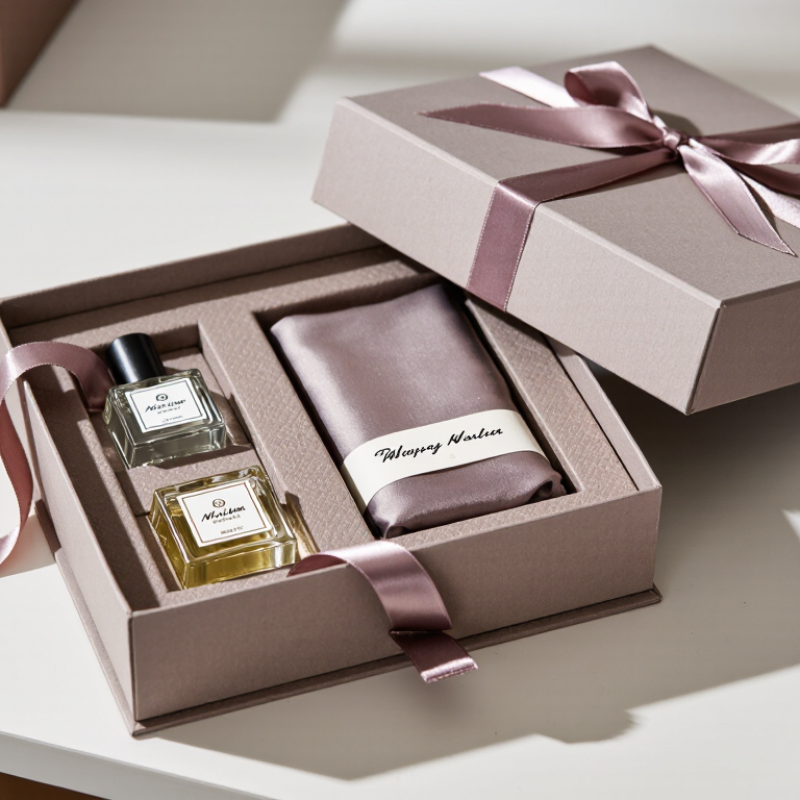
A custom gift box is a packaging solution designed around a specific product, audience, and occasion. It may include tailored dimensions, printed artwork, protective inserts, labels, and opening details. Unlike a standard carton, it reflects the business’s visual identity and the recipient’s expected experience. The 2021 Next in Personalization report found that 71% of consumers expect personalized interactions. A well-designed box gives that expectation a physical form.
In practice, customization begins with measurement. A box should hold the product firmly without wasting space. A ceramic item may need molded pulp protection, while a clothing gift may need tissue paper and a shallow drawer structure. Material selection matters too. The Sustainable Packaging Market report published by Smithers projected strong growth for recyclable and fiber-based formats through 2028. This supports practical choices, but recycled materials can vary in texture and strength. They are not automatically perfect.
The box also carries operational responsibilities. It must survive stacking, vibration, humidity, and repeated handling. A 2023 packaging industry survey reported that damage reduction remains a major packaging priority for businesses. That detail is easy to overlook during visual design. I have seen attractive boxes fail because the insert moved during transit. Testing with a filled box, tape, and simulated shipping is more useful than judging a sample on a clean desk. Small flaws often reveal the real design.
A custom gift box is packaging designed around a product, occasion, and brand message. Choosing recyclable materials can help businesses create a memorable unboxing experience while supporting more responsible packaging decisions.
Recycling rates for selected packaging materials in the United States, 2018. Source: U.S. Environmental Protection Agency.
A custom gift box can make a business feel recognizable before the product is revealed. It turns packaging into a physical expression of the company’s character. The lid, texture, color, and opening style all shape the customer’s first impression. That moment carries emotional weight. When these details stay consistent, customers can identify the business more easily across different products and occasions.
From packaging development experience, material choices often communicate more than printed slogans. A firm recycled board may suggest care and responsibility. A soft-touch finish can create a quieter, more refined feeling. Printed inserts, tissue paper, and carefully placed cards can continue the same visual language. However, branding should not override practicality. A beautiful box that is difficult to open may frustrate customers. Heavy materials can also increase shipping costs and waste. Small tests matter.
Reliable brand identity requires more than matching colors. Teams should define approved tones, type styles, logo placement, and production tolerances. They should also check how the design appears under warm store lighting and ordinary home lighting. A pale color may look elegant on screen but become dull in print. I have seen packaging concepts lose clarity because too many decorative elements competed for attention. The better approach is often simpler. Custom gift boxes should feel distinctive, useful, and honest about the quality inside. Some inconsistency may remain between production batches, so regular quality checks protect the customer experience.
Custom gift boxes can support several business goals beyond simple appreciation. They can welcome new clients with samples, printed guides, and a handwritten note. A well-planned box can also make employee onboarding feel more personal. Include a notebook, access instructions, and useful desk items. Keep the contents practical.
They work well for events and product launches, too. A conference box might hold a schedule, reusable bottle, and compact product sample. For a launch, layered packaging can create a careful reveal without excessive waste. Custom sizes reduce empty space and help protect delicate items during delivery. That detail often matters more than decorative extras.
Gift boxes can strengthen internal culture through service awards, milestone gifts, or seasonal care packages. Packaging colors, labels, and messages can keep communication consistent across offices. Still, customization is not automatically effective. The first design may look impressive but exceed the budget or arrive damaged. Test one complete box before ordering hundreds. Check opening time, material quality, shipping weight, and recipient needs. A simple feedback form can reveal what people actually used. That evidence should guide the next version.
A custom gift box should begin with its purpose, not its decoration. Define the recipient, product size, budget, and delivery conditions before choosing materials. A box for delicate glassware needs stronger inserts than one for stationery. Measure every item, including labels, ribbons, and protective wrapping. Small errors can create costly movement during shipping.
In my packaging work, simple prototypes have prevented many design problems. I usually test a paper mock-up before ordering printed samples. Place the products inside and shake the box gently. Watch for gaps, loose corners, or pressure on fragile surfaces. The test may look basic. It often reveals more than a digital drawing.
Choose materials that match the product and your business values. Recycled paperboard can provide a polished appearance, while molded inserts can improve stability. Ask suppliers for material specifications, print proofs, and sample approval records. Check color consistency under natural and indoor light. A design that looks elegant on screen may feel crowded in hand. I once approved a sleeve with attractive details but insufficient room for a thank-you card. It worked, but only after a costly adjustment. Leave space for practical elements, including care instructions and contact information. Keep opening the box easy, especially for older customers or people with limited hand strength. A beautiful package should still function reliably.
A custom gift box can strengthen presentation, but its cost begins with the structure. Board thickness, paper grade, dimensions, printing coverage, coatings, inserts, and finishing all affect the quotation. A rigid box with magnetic closure usually costs more than a folding carton. However, shipping volume may increase the total expense. In production reviews, one repeated lesson is clear: attractive prototypes can hide expensive assembly work. The cheapest quote is not always the most efficient choice.
Quality depends on measurable controls, not appearance alone. Ask for material specifications, compression testing, color tolerances, and sample approval before mass production. The European Paper Recycling Council reported an 82% paper packaging recycling rate in Europe in 2022. Recyclable paper choices can support sustainability claims, but mixed materials may complicate recycling. Production is also affected by minimum order quantity, tooling, machine capacity, labor, and seasonal demand. A small size change can alter sheet utilization and create unexpected waste. That deserves a second review.
Tips: Request a structural drawing before artwork. Compare total delivered cost, not only the unit price. Test the box with the real product, tissue, and shipping conditions. Allow time for one imperfect sample; it often reveals weak corners, loose lids, or inaccurate colors. A practical specification should record dimensions, board grade, print standard, inspection points, and approved tolerances.
Practical planning benchmarks for custom gift-box projects
| Cost, Quality, or Production Factor | Typical Options or Benchmark | Typical Effect on Unit Cost | Effect on Quality | Production Consideration | Recommended Business Use |
|---|---|---|---|---|---|
| Box Structure | Folding carton, rigid setup box, magnetic-close box, or drawer box | Folding cartons generally have the lowest cost; rigid and magnetic structures usually cost more because they require thicker boards and more assembly. | Rigid structures provide better protection, shape retention, and a more premium presentation. | More complex structures require additional tooling, manual assembly, and quality checks. | Use folding cartons for efficient distribution and rigid boxes for premium gifts or reusable packaging. |
| Material and Board Thickness | Paperboard commonly ranges from approximately 300–400 gsm; rigid boxes often use greyboard around 1.2–2.5 mm thick. | Heavier board increases material consumption, shipping weight, and usually the unit price. | Thicker material improves stiffness, stacking strength, and resistance to crushing. | The selected board should match the product weight and the expected transport environment. | Choose lightweight board for low shipping cost and stronger board for fragile or heavy contents. |
| Printing Coverage | One-color, two-color, or full-color CMYK printing on selected exterior and interior panels | Full-coverage printing and printing on multiple panels require more ink, setup, and inspection. | Professional color control creates more consistent brand presentation across production batches. | Artwork must include correct dimensions, bleed, safe zones, and approved color references before production. | Use selective printing when controlling cost is more important than full visual coverage. |
| Surface Finish | Matte or gloss film, aqueous coating, soft-touch coating, embossing, debossing, foil stamping, or spot varnish | Basic coatings are usually more economical; foil, embossing, and multiple finishes add tooling and processing costs. | Finishes can improve scuff resistance, tactile feel, contrast, and perceived value. | Special finishes may require separate dies, registration checks, and additional production stages. | Select one focal finish for premium impact without overcomplicating the package. |
| Insert and Interior Protection | Paperboard insert, molded fiber insert, foam insert, or fabric-covered tray | A simple paperboard insert is generally less expensive than molded, foam, or fabric-covered options. | A fitted insert reduces movement, scratching, and breakage during handling and delivery. | The insert must be tested with the actual product, especially when dimensions or weight vary. | Use fitted inserts for fragile, irregularly shaped, or high-value products. |
| Order Quantity | Small pilot orders, medium production runs, or larger repeat orders | Larger quantities generally reduce the unit cost because setup, tooling, and prepress expenses are spread across more boxes. | A stable specification across repeat orders improves consistency and reduces variation. | Minimum order quantities vary by structure, material, printing method, and production equipment. | Start with a pilot quantity when testing demand, then scale after the design is approved. |
| Tooling and Die-Cutting | Standard cutting layout or custom die with windows, locking tabs, handles, or unusual contours | Custom tooling creates an upfront cost; intricate layouts also increase setup and cutting time. | Accurate tooling improves folding, alignment, closure, and overall structural performance. | Prototype approval is important before mass production because structural changes may require a new die. | Use established structures when speed and cost control are the primary goals. |
| Sampling and Quality Control | Digital mock-up, pre-production sample, color proof, or production-line inspection | Sampling adds a small project cost but can prevent expensive rework, rejected stock, and delivery delays. | Pre-production approval verifies dimensions, color, fit, finish, and closure before the full run. | Allow time for revisions; a physical sample is more reliable than judging structure from artwork alone. | Always sample products with tight tolerances, multiple components, or premium finishes. |
| Production Lead Time | A common planning window is approximately 2–6 weeks after artwork and specifications are approved; complex projects may take longer. | Urgent production, expedited materials, and split shipments can increase the total project cost. | Adequate time supports better sampling, curing, inspection, and packing. | Lead time depends on structure, quantity, finish, seasonality, revisions, and shipping method. | Freeze specifications early when the packaging is tied to a campaign or product launch. |
| Shipping and Storage | Flat-packed cartons, assembled rigid boxes, local delivery, or international freight | Large dimensions, assembled volume, heavier boards, and long-distance freight increase landed cost. | Proper packing protects finished boxes from moisture, compression, dust, and scuffing. | Storage space and humidity control should be considered, particularly for paper-based packaging. | Choose flat-packed formats when warehouse space and freight efficiency are priorities. |
It is packaging designed for a specific product, audience, and occasion. It may include custom dimensions, artwork, inserts, labels, and opening details. The box creates a physical brand experience. It is not perfect by itself.
Measure the product, protective materials, and available movement. The item should stay secure without excessive empty space. A ceramic item may need molded fiber protection. Clothing may suit tissue paper and a shallow drawer box.
They can welcome clients, support employee onboarding, and organize event materials. A useful box might include samples, a notebook, instructions, or a schedule. Practical contents usually outperform decorative extras.
The structure should resist stacking, vibration, humidity, and repeated handling. Test a filled box with tape and simulated shipping movement. Check whether the insert shifts. A clean desk hides problems.
Board thickness, dimensions, printing coverage, coatings, inserts, and finishing affect the price. Rigid boxes with magnetic closures usually cost more. Shipping volume can raise the total expense. Compare delivered cost, not only unit price.
Request material specifications, compression testing, color tolerances, and sample approval. Inspect corners, lid movement, print accuracy, and assembly time. Test the real product inside. One imperfect sample may prevent hundreds of failures.
Recycled and fiber-based materials can support practical sustainability goals. However, texture and strength may vary. Mixed materials can complicate recycling. Sustainability claims need careful checking.
Record dimensions, board grade, print standards, inspection points, and approved tolerances. Include the product, tissue, insert, and shipping conditions. Minimum order quantity and seasonal capacity also matter. Small changes can create unexpected waste.
A custom gift box is a carefully designed packaging solution created to reflect a business’s identity, products, and customer experience. Unlike standard packaging, it can include tailored dimensions, colors, materials, printed graphics, inserts, and finishing details. By combining practical protection with a consistent visual style, a custom gift box helps strengthen brand identity, improve product presentation, and make each delivery or purchase feel more thoughtful and memorable.
Businesses can use custom gift boxes for product launches, seasonal promotions, corporate gifts, subscription packages, special events, and customer appreciation programs. Planning should begin with the box’s purpose, target audience, product size, and desired unboxing experience. Design choices should balance appearance, usability, durability, sustainability, and production requirements. Costs and quality are influenced by material selection, box structure, printing methods, finishes, order quantity, customization level, and manufacturing timelines. Careful coordination of these factors helps businesses create packaging that is attractive, functional, cost-effective, and aligned with their overall marketing goals.

Jinze Crafts