Choosing the right PU Leather Jewelry Box in 2026 requires more than attractive product photos. Global buyers need protection, presentation, consistent quality, and dependable supply. A box may look luxurious online, yet arrive with loose stitching, uneven edges, or a strong chemical odor. Small details matter.
Packaging specialist Michael Nguyen says, “A jewelry box earns trust when its beauty survives handling, shipping, and daily use.” This practical view should guide every purchasing decision. A reliable PU Leather Jewelry Box should use smooth, abrasion-resistant material, firm inner padding, clean seams, and a secure hinge. Its ring rolls should hold jewelry without squeezing delicate pieces. Its compartments should prevent necklaces from tangling during transport.
Real testing helps.
Buyers should inspect color consistency, surface recovery after pressure, closure strength, and insert alignment. They should also request samples before approving large orders. A photograph cannot show stitching tension or hidden glue marks. That weakness deserves attention. Some suppliers offer excellent customization but struggle with delivery consistency. Others provide fast production while using thin lining materials.
The best 2026 options balance appearance, function, and responsible sourcing. Global buyers should compare dimensions, packaging volume, moisture protection, labeling needs, and export documentation. They should confirm whether materials meet the destination market’s applicable safety and environmental requirements. Clear communication reduces costly misunderstandings.
This guide examines practical choices for retailers, jewelry brands, wholesalers, and corporate gift suppliers. It focuses on performance rather than empty luxury language. A beautiful box is useful. A dependable one is better.
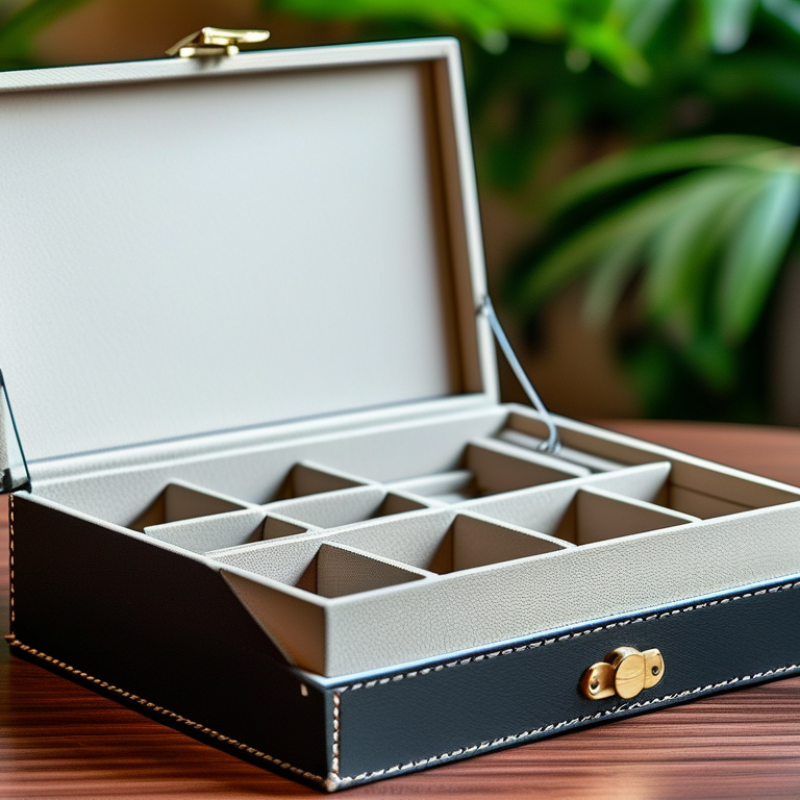
It is not one uniform material. Surface texture, coating thickness, backing density, and finishing methods create major differences between products. Some boxes feel soft and matte. Others feel glossy, stiff, or slightly plastic-like.
In practical sourcing, buyers should request material specifications, color standards, and abrasion results before approving bulk production. Check the lining, tray firmness, hinge movement, zipper strength, and odor after packaging. A neat sample can still fail after heat and humidity exposure.
I have seen attractive surfaces crack near folded corners because the coating was too rigid. That detail is easy to miss.
A better comparison uses measurable criteria, including coating thickness, hydrolysis resistance, seam quality, and repeated opening tests. Water-based coatings may support lower-emission goals, yet performance still depends on formulation and curing. Buyers should verify claims with test reports and production samples.
Gift companies, hotels, travel-accessory sellers, subscription businesses, and online retailers may require compact sizes, personalized interiors, recyclable packaging, and low minimum quantities. Custom colors are popular, but unusual shades can increase approval time and create batch variation. That risk deserves honest planning.
For global buyers, a PU leather jewelry box should be judged beyond color and surface gloss. A practical testing plan begins with ISO 2418 sampling principles. Mark the material direction, avoid seams and embossed areas, and cut specimens from several zones. This reduces misleading results from one unusually smooth panel. ISO 2418 mainly guides specimen location and orientation for leather-related testing. PU synthetic leather may require an adapted method. Document that limitation clearly.
ASTM D751 can support performance checks for coated fabrics used in box covers and linings. Select tests that match the product’s risks, such as coating adhesion, breaking strength, and tear resistance. Condition samples before testing. A humid warehouse and a dry showroom can affect flexibility and bonding. Inspect corners, folded edges, and glued joints separately. The flat sheet may pass while the finished box fails. That happens.
Tips: Request a sampling map, test photographs, conditioning records, and raw data. Compare at least three production batches. Do not accept only a polished summary. Ask whether ASTM D751 methods were modified for PU material. Small differences matter. In practice, some buyers test only the decorative surface, which is incomplete. A better report links each result to a specific box component, production lot, and acceptance limit. Reflect on the limits, too. No single standard predicts every year of consumer handling.
| Evaluation Dimension | Applicable Standard | What Is Evaluated | Sample / Reporting Basis | Purchaser Reference Target* | Interpretation for Jewelry Boxes |
|---|---|---|---|---|---|
| Sampling location and specimen traceability | ISO 2418:2023 | Representative sampling locations, specimen orientation, identification and conditioning records for leather-related testing. | Record lot number, material roll or panel, sampling position, grain direction and conditioning history. | 100% traceable samples; no unmarked specimens. | Reduces the risk that only visually perfect surface areas are tested. |
| Thickness uniformity | ASTM D1813 | Thickness of leather or leather-like sheet material. | Report mean, minimum, maximum and coefficient of variation in millimetres. | 0.80–1.20 mm for common PU cover material; variation ≤10% within a panel. | Supports consistent folding, edge finishing and fit around rigid box components. |
| Tensile strength and elongation | ASTM D751, tensile testing of coated fabrics | Maximum tensile force and elongation of the coated textile composite. | Report direction tested, specimen dimensions, conditioning, peak force in N and elongation at break in %. | Warp and weft: ≥300 N/25 mm; elongation at break typically 15–60%, subject to construction. | Helps prevent tearing when the cover is stretched over corners or pulled around hinges. |
| Coating adhesion | ASTM D751, applicable adhesion procedure | Bond strength between the PU coating and textile backing where the selected procedure is applicable. | Report force per unit width, failure mode and whether separation is adhesive or cohesive. | ≥10 N/25 mm; no visible delamination after conditioning. | Important for avoiding peeling at folded edges, seams and frequently handled corners. |
| Tear resistance | ASTM D751, tear-testing procedures for coated fabrics | Resistance to propagation of a cut or notch through the coated composite. | Report tear force in N, test direction and specimen configuration used. | ≥25 N in both principal directions for light-to-medium duty covers. | Indicates whether small cuts near slots, piping or stitch holes are likely to spread. |
| Flex-crack resistance | ISO 5402-1 | Resistance of leather-like material to cracking during repeated flexing. | Report number of flex cycles and grade or visual crack result according to the selected method. | No visible surface cracking after 50,000 flex cycles at the agreed test severity. | Relevant to opening, closing and repeated handling of the jewelry box lid. |
| Abrasion resistance | ISO 12947-2, Martindale method | Resistance to surface wear under rubbing action. | Report cycles to specified appearance change, coating breakthrough or mass loss, as agreed. | ≥20,000 cycles without substrate exposure for general retail handling. | Helps protect the finish from contact with shelves, packaging and frequent hand use. |
| Color fastness to rubbing | ISO 11640 | Transfer of color from the surface to a dry or wet rubbing material. | Report dry and wet rubbing results using the applicable grey-scale rating. | Dry rubbing ≥4; wet rubbing ≥3–4, depending on color and buyer risk level. | Limits staining of hands, protective pouches and light-colored clothing. |
| Hydrolysis and accelerated ageing | ISO 1419, Procedure C or purchaser-defined PU ageing protocol | Resistance of coated material to heat and humidity exposure that may cause tackiness, cracking or peeling. | Record temperature, relative humidity, exposure duration and post-ageing appearance or adhesion. | No sticky surface, visible peeling or cracking after 14 days at 70 °C and 95% RH, unless a different protocol is specified. | Useful for international shipping and storage in warm, humid climates. |
| Surface appearance and finish consistency | ISO 2418 sampling principles plus purchaser visual-inspection protocol | Grain uniformity, gloss, color variation, pinholes, wrinkles, scuffs and coating defects. | Inspect under controlled lighting; document defect size, location and quantity per panel or lot. | No critical defects on visible faces; color difference and defect limits agreed before production. | Protects the perceived quality of the finished jewelry box. |
| Odor and restricted-substance screening | Buyer specification; applicable destination-market chemical regulations | Unacceptable odor and regulated substances potentially present in PU coating, dyes, adhesives or backing. | Use an accredited laboratory where chemical compliance documentation is required; retain material declarations and test reports. | Pass the legal and customer-specific limits applicable to the destination market. | Supports safer handling and reduces customs or marketplace compliance risk. |
*Reference targets are purchaser-defined screening values, not universal pass/fail requirements of the cited standards. The laboratory report should identify the exact edition, procedure, specimen configuration, conditioning conditions and acceptance criteria used.
A 2026 PU leather jewelry box must pass more than a visual inspection. Global buyers should verify REACH SVHC status for every article, including the box, lining, handle, zipper, and decorative fittings. Under REACH Article 33, communication duties generally apply when an SVHC exceeds 0.1% by weight in an individual article. The threshold is not calculated across the complete gift set.
ECHA’s enforcement project inspected 2,407 products and reported an 18% non-compliance rate. That figure shows why supplier declarations alone may be insufficient. Request a recent material composition statement, supplier traceability records, and laboratory testing for high-risk components. PU coatings, adhesives, metal plating, and synthetic lining deserve closer attention. Keep the test report linked to a batch number.
A practical compliance file should identify each article, its weight, SVHC concentration, and intended market. For EU distribution, SCIP notification may also apply when an article contains a Candidate List substance above 0.1%. ECHA updates the Candidate List periodically, so an old report can become incomplete. That is an uncomfortable detail. Still, it matters.
Choose suppliers that explain test methods and detection limits clearly. Ask whether testing covers finished assemblies, not only raw fabric. A jewelry box may look simple. Its compliance chain is not. Review documentation before sampling, and repeat checks after changing coatings, adhesives, or hardware.
For global buyers selecting a 2026 PU leather jewelry box, color safety deserves close inspection. EN 14362 screening checks whether azo colorants can release any of 22 restricted aromatic amines. Under EU REACH Annex XVII, Entry 43, the limit is 30 mg/kg for each relevant amine. The rule matters when colored PU leather touches jewelry, packaging foam, or lining fabrics.
A reliable supplier should provide a laboratory report identifying the tested material, color, batch, and detection limit. EN 14362-1 is designed mainly for textiles, so PU-coated materials require careful laboratory interpretation. The testing plan should separate the surface coating, backing fabric, printed areas, and dark-colored trims. Small details matter. A passing certificate for one color cannot automatically cover every color.
The European Chemicals Agency’s enforcement reports repeatedly show that restricted-substance compliance remains uneven across consumer products, especially where complex materials are assembled. The European Commission’s Safety Gate reports also continue to record chemical risks among non-food product alerts. These findings support batch-based screening rather than relying only on supplier declarations. In my experience, buyers often check the box shell but overlook the small elastic loop or dyed inner pocket. That is a weak point. Testing every component may raise cost, yet skipping one can undermine an otherwise careful purchase. Documentation should be traceable, recent, and linked to the production batch, not merely copied from an earlier order.
For global buyers in 2026, a PU leather jewelry box should be evaluated with a practical buyer matrix. Capacity matters beyond the stated dimensions. Check whether it holds rings, earrings, bracelets, and longer necklaces without tangling. Measure usable compartments, tray depth, and lid clearance. A box may look spacious but lose capacity through thick padding.
Hardware requires close inspection. Test hinges for smooth movement and inspect clasps after repeated opening. Confirm plating consistency, screw alignment, and resistance to light scratching. MOQ should match your sales forecast, not just the factory’s preference. A lower MOQ can reduce inventory risk, but it may increase unit cost. Request a clear lead-time schedule covering sampling, production, inspection, and shipping preparation. Delays often begin with unclear approvals.
Tips: Build a scoring sheet with capacity, hardware, MOQ, lead time, and QC metrics. Record photos, measurements, and test results. For QC, check color variation, stitching distance, odor, surface marks, loose threads, and compartment bonding. Set measurable limits, such as no visible scratches from 30 centimeters and fewer than two stitching defects per unit. A sample can look excellent while bulk production differs. I have learned that one approved sample is not enough. Request pre-shipment inspection evidence and retain random production units for comparison. Small details protect buyer confidence.
: PU leather has a polyurethane coating over textile or split-leather backing. It can feel soft, matte, glossy, stiff, or slightly plastic-like. The material varies widely. Check the backing, coating thickness, texture, and finishing method.
Terms like standard, upgraded, and premium have no consistent global meaning. Compare coating thickness, hydrolysis resistance, seam quality, and opening-test results. Request production samples and laboratory reports. Labels alone are not enough.
Inspect the lining, tray firmness, hinges, zipper, and packaging odor. Test the sample after heat and humidity exposure. Look closely at folded corners. Rigid coatings may crack there.
Potential buyers include gift companies, hotels, travel-accessory sellers, subscription businesses, and online retailers. They may need compact sizes, custom interiors, recyclable packaging, and low minimum quantities. Unusual colors can delay approval and increase batch variation.
Request screening for restricted aromatic amines in colored materials. Test the surface coating, backing fabric, printed areas, trims, and inner pockets separately. A report for one color cannot cover every color. Small components matter.
The report should identify the tested material, color, batch, and detection limit. It should match the actual production materials. Use recent, traceable documents. Old copied reports create uncertainty.
Check rings, earrings, bracelets, and long necklaces separately. Measure usable compartments, tray depth, and lid clearance. Thick padding can reduce practical capacity. A large exterior may hide a cramped interior.
Open and close hinges and clasps repeatedly. Check plating, screw alignment, scratches, stitching, loose threads, odor, and bonding. Set clear limits before production. For example, scratches should not show from 30 centimeters.
Match the minimum order quantity to your sales forecast. A lower MOQ may reduce inventory risk but increase unit cost. Confirm sampling, production, inspection, and shipping-preparation dates. Unclear approvals often cause delays.
No. Bulk production can differ from the approved sample. Request pre-shipment inspection evidence and retain random production units. Compare photos, measurements, and test results. I would still check the small elastic loop.
This guide explains how a PU Leather Jewelry Box is defined, including its material composition, quality grades, construction features, and suitability for global buyers in 2026. It outlines practical ways to compare surface finish, lining, structure, hardware, odor, durability, and storage capacity while matching product specifications with different market needs. Buyers will also learn how to establish a reliable testing process through ISO 2418 sampling and ASTM D751 performance evaluations, covering aspects such as adhesion, flexibility, tensile strength, and resistance to wear.
Compliance and quality control are central to the evaluation process. The article highlights REACH SVHC disclosure requirements at the 0.1% article threshold and recommends EN 14362 screening for restricted azo dyes in PU leather materials. A clear buyer matrix helps assess capacity, hardware quality, MOQ, lead time, inspection procedures, defect limits, packaging, and documentation, enabling more consistent sourcing decisions and reducing quality risks across international orders.

Jinze Crafts